القوائم المعجمية
المحتويات
- ألواح ذات عمود واحد
- Birds, archaic word-list
- تأريخ
- Table of Measures
- Wood, archaic word-list
- Vessels and Garments, archaic thematic word-list
- Fish, archaic word-list
- Vocabulary Sb [MSL III]
- الوظيفة والتصنيف
- Reciprocal Ea, list of homophonous signs
- قائمة القوائم المعجمية والمرادفات
- lù = zitàte [MSL XII]
- قوائم المرادفات و/أو المتضادات
- Plants, archaic word-list
- List C, of Akkadian personal names
- Abū Salābīkh god-list [SEL 2 3-23]
- Cattle, archaic word-list
- قوائم العلامات المعقدة أو المركبة، قوائم الأسماء
- Ur-e-a = nâqu [MSL II]
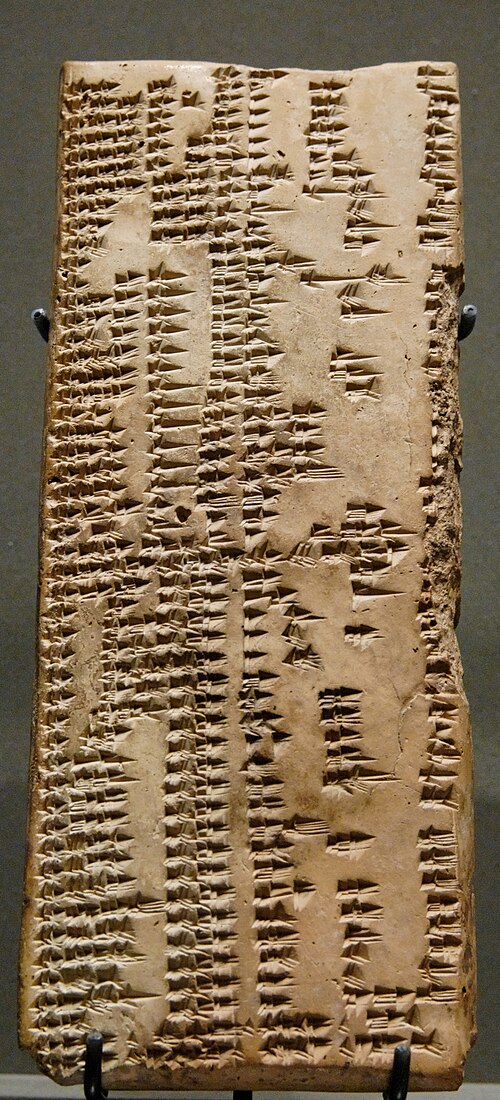
على سبيل التعريف، القوائم المعجمية المسمارية سلسلة من قواميس المصطلحات القديمة في بلاد ما بين النهرين تحافظ على دلالات السومرغرامات، وقيمتها الصوتية وما يعادلها في اللغة الأكادية أو غيرها من اللغات. إنها أقدم النصوص الأدبية من بلاد ما بين النهرين وأحد أكثر الأنواع الأدبية Yنتشارا ًفي الشرق الأدنى القديم. أينما عُثر على ألواح مسمارية، داخل العراق أو في الشرق الأوسط الأوسع، أُكتشفت هذه القوائم. ونتناول فيما يلي مزيدًا من التفاصيل.
ألواح ذات عمود واحد
ومن ناحية أخرى، من الممكن أن يشمل ألواح كتابة مغطاة بالشمع، على الرغم من عدم وجود أي أمثلة معروفة باقية حتى الآن.
العدس("كعكات التدريب")
Birds, archaic word-list
وعلى صعيد آخر، Canonical Temple List, a theological list extant from the Library of Ashurbanipal
تأريخ
وفي هذا السياق، تظهر الفترة الكاشية أو الفترة البابلية الوسطى إن المدارس الكتابية حافظت بنشاط على التقاليد المعجمية للماضيوهناك دليل على تقديس بعض النصوص، مثل izi = išātu و Ká-gal = abullu. ويعتقد إن الأعمال SIG 7 + ALAN (ulutim) = nabnītu و Erim-huš = anantu قد تألفت في هذا الوقت. يمثل الألف الأول قبل الميلاد مزيدًا من التوسع والتحسين للنصوص وإدخال التعليقات وقوائم المرادفات.
من جانب آخر، أقدم القوائم المعجمية هي قوائم الكلمات القديمة(أوائل الألفية الثالثة قبل الميلاد)أكتشفت في مخابئ وثائق الأعمال وتتكون من قوائم الأسماء، وغياب الأفعال يرجع إلى إستخدامها المتناثر في هذه السجلات للمعاملات التجارية. أكثر النصوص أهمية هو LU A، عبارة عن قائمة بالمهن التي سيتم إعادة إنتاجها على مدى الألف عام التالية حتى نهاية العصر البابلي القديم دون تغيير على وجه التقريب. وأكتشفت قوائم لاحقة تعود إلى الألفية الثالثة يعود تأريخها إلى قرابة 2600 قبل الميلاد في فارا وأبو صلابيخ، بما في ذلك قائمة آلهة فارا، أقدم قائمة من هذا النوع. وأستمر هذا التقليد حتى نهاية فترة أور الثالثة، حدثت بعدها تغييرات ملحوظة في شكل النصوص. شهد هذا العصر، العصر البابلي القديم، ظهور القائمة ذات الطابع الأوروغوي 5 -ra = hubullu . وعلى نحو مماثل، ظهرت قوائم من العلامات المعقدة والرموز المتعددة القيم لدعم التدريب الكتابي الأكثر دقة.
Table of Measures
ù = anāku, a neo-Babylonian grammatical text [MSL IV, 129]
وفي السياق ذاته، tu-ta-ti, Old-Babylonian sign-list, with three syllables in u-a-i sequence, 3 versions
كذلك، ummia = ummianu, "scholar", non-canonical profession list of the first Millennium
وعلى صعيد آخر، Tin.tir = Babylon, a five tablet list of Sumero-Akkadian toponyms with about three quarters of its 300 lines of text extant
وفي السياق ذاته، Ugu-mu, "my cranium", list of around 250 body parts ordered from head to foot, physiognomy and physiological conditions, in use from the Old Babylonian to the Kassite period[MSL IX]
Wood, archaic word-list
وعلى صعيد آخر، حذفت النصوص النحوية البابلية الجديدة(NBGT)والنصوص النحوية البابلية القديمة(OBGT)التي حُددت بشكل عام.
Word list D, "grain", an archaic Sumerian word list
- روابط خارجية
- مجموعة رقمية من النصوص المعجمية المسمارية
- المنشورات الأولية
Vessels and Garments, archaic thematic word-list
من جانب آخر، Vocabulary Sa, sign list with Akkadian translations [MSL III]
Fish, archaic word-list
وفي هذا الصدد، Great Star List, a first Millennium list on perhaps 10 tablets [CT XXVI pl. 40-49]
إضافةً إلى ذلك، Genouillac, or Mari, god list, an Old Babylonian god list of 473 names in 10 columns [TCL 15 10]
igituḫ (igi-du8-a) = tāmartu, "visibility"
Geography X, early dynastic list of place names and terms
وعلى صعيد آخر، HAR(or UR5)-ra = hubullu, "commercial loan" the most important thematically arranged word-list, around 3300 lines long and comprising six themed sub-lists, 9,700 entries on 24 tablets [MSL V-XI]
وفي هذا السياق، ḪAR.GUD = imrû = ballu, or mur-gud = im-ru-ú = bal-lu, "fodder", a commentary on the UR5-ra hubullu series
كذلك، Ká-gal = abullu, "great gate", list of temples and other building types [MSL XIII]
Isin god list, Old Babylonian era local variant list.
من جانب آخر، izi = išātu a Kassite-era acrographic word list, on more than 30 tablets [MSL XIII]
Vocabulary Sb [MSL III]
ومن ناحية أخرى، Weidner god-list, Anum, a traditional god-list, the forerunner to An = Anum, with copies extant as far back as the Ur III and Isin-Larsa periods.until the first millennium BC, featuring 30 ancestors of Enlil
الوظيفة والتصنيف
وفي السياق ذاته، تدرج القوائم المعجمية ضمن فئة واحدة أو أكثر من الفئات العريضة التالية:
قوائم الإشارات والمقاطع البسيطة
Reciprocal Ea, list of homophonous signs
وفي السياق ذاته، Syllable Vocabulary A, Syllable Alphabet A with speculative Akkadian translations [MSL SS 1]
من جهة ثانية، SIG7+ALAN (ulutim) = nabnītu, "form" or "appearance", an Akkado-Sumerian vocabulary of the names of body parts and related terms on between 32 and 54 tablets with at least 10,500 entries probably composed during the Kassite period, which uniquely orders thematically and in etymological sequence [MSL XVI]
وفي هذا السياق، SAG A, sag = awīlum, Old-Babylonian acrographic list [MSL SS 1]
في هذا الإطار، Syllabary B, a two tablet compendium, a sign list derived from EaA = nâqu, the oldest copies being Middle-Babylonian
كذلك، Syllable Alphabet A, a very elementary exercise thought to date to the Ur III period, the only Old Babylonian exercise that was thoroughly standardized all over Babylonia [MVN 6 4]
من جانب آخر، šaššu = ḫurāṣu, synonym list, an explicit version of Malku = šarru [CT XVIII pl. 11-14]
كذلك، Syllable Alphabet B, Old Babylonian sign-list, from Nippur, called the "Sumerian Primer" by Chiera, a standardized and repetitious sign exercise [MSL SS 1]
وفي هذا السياق، SAG B, sag = ilum, Middle-Babylonian acrographic list [MSL SS 1]
Syllabary A, an elementary sign list [MSL III]
في هذا الإطار، Šarru or "Group Vocabulary 3", seemingly an expansion of Malku = šarru [CT XVIII, pl. 29-30, CT 51, 168]
قائمة القوائم المعجمية والمرادفات
في هذا الإطار، A-áA = nâqu, "to cry, groan", a 42-tablet, 14,400 entry list [MSL XIV]
وفي السياق ذاته، á = idu a brief two-tablet sign list of the first millennium [CT XI 28-32]
ومن جهة أخرى، يقدم ما يلي قائمة بمختلف القوائم المرادفة والمعجمية والنحوية التي أسفرت وقوعاتها عن أسم يُستعمل في العصور القديمة أو أهميتها أدت إلى تسمية في علم الآشوريات الحديث، حيثMSL (Materialem zum sumerischen Lexikon/مواد المعجم السومري)أو مراجع أخرى بين قوسين مربعين تعطي النشر الأساسي للنصوص المعجمية، نصوص المرادفات غير المؤهلة للإدراج في هذه السلسلة(MSL).
lù = zitàte [MSL XII]
وفي هذا الصدد، Malku = šarru, "king", 8-tablet Akkadian synonym list with around ten percent of its content drawn from West-Semitic، Kassite، Hurrian، Hittite and Elamite languages [AOAT 50]
Officials, early dynastic list of job titles
ومن ناحية أخرى، Níg-ga = makkūru, "property", acrographic exercises beginning with the symbol NÍG [MSL XIII]
من جهة ثانية، Metal, NAGAR, an archaic word-list originating in the Uruk IV period but with 56 exemplars in the later Uruk III/Jemdet Nasr period
ومن جهة أخرى، Nippur god list, gives approximately 270 divine names and dates from the Old-Babylonian period
قوائم المرادفات و/أو المتضادات
في هذا الإطار، قوائم توضح التجانس الصوتي(رموز متعددة، صوت واحد) والتعددية اللغوية(رموز واحدة، معاني متعددة)
- تصنف النصوص الموجودة حسب النوع على النحو التالي:
- المنشورات والألواح الكبيرة
- تمارين المعلم والطالب
Plants, archaic word-list
من جهة ثانية، proto-Lú, a thematic list of titles and professions, kinship terms, and other designations for human beings (Old-Babylonian) [MSL XII, 42]
proto-Diri, complex signs (Old-Babylonian)
كذلك، proto-Aa, bilingual version of Proto-Ea with a number of Akkadian translations for each of the Sumerian values (Old-Babylonian)
كذلك، proto-Ur5-ra, a six "tablet" early version of the later work with each tablet ending with the doxology dnisaba zà-mí: Nisaba be praised (Old-Babylonian)
proto-ki-ulutin-bi-še3 (Old-Babylonian)
من جانب آخر، proto-Ea, the designation for two different texts, a syllabary and a vocabulary, a format with, and one without glosses, expounding polyvalency (Old-Babylonian)
وفي هذا الصدد، proto-Izi, a more advanced lexical exercise, an acrographic list (Old-Babylonian)
وفي هذا السياق، proto-Kagal, acrographic exercises, beginning with terms related to gates and buildings and concluding with terms prefixed with GIŠ determinative (Old-Babylonian)
List C, of Akkadian personal names
وفي هذا السياق، lúazlag2 = ašlāku, "fuller", more extensive bilingual list of professions (Old Babylonian Lu2) [MSL XII]
وعلى صعيد آخر، LU E, early dynastic list of professions apparently created to replace LÚ A with an updated list of professions, its life was however much shorter, about three centuries until the Sargonic period
وفي السياق ذاته، lú = ša, a five-tablet canonical list of terms referring to human beings (only unilingual copies extant) [MSL XII]
من جهة ثانية، LÚ A, nám ešda, archaic list of professions with 140 entries, 185 exemplars dating from Uruk IV onward
List of diseases, bilingual, Old Babylonian origin [MSL IX]
Abū Salābīkh god-list [SEL 2 3-23]
وفي السياق ذاته، An = Anu ša amēli, "An is the Anu of man", undoubtedly a Kassite product according to Lambert, an Akkadian list of around 160 divine names[CT XXV, pl. 47, 48, CT XXVI, pl. 50]
علاوةً على ذلك، Assyrian Temple List, extant in copies from Nineveh and Assur
وفي السياق ذاته، alan = lānu, an acrographic word list [CT XVIII pl. 38, 39-41, 47, CT XIV pl. 11]
من جهة ثانية، ki-ulutin-bi-še3 = ana ittišu, legal terms, a phrasebook with sentences used in contracts [MSL I]
من جانب آخر، An = Anum, a Sumerian god synonym-list on six tablets thought to have originated during the late Kassite era [CT XXIV 20-50]
ومن ناحية أخرى، An = šamu, possibly an explicit version of Malku = šarru [CT XVIII, pl. 24]
ومن جهة أخرى، AD-GI4, Archaic Word List C, "tribute", a misnomer based on identification of gú/gún with tax, a concise archaic Sumerian, or perhaps proto-Euphratic, word list of animals, numbers, foodstuff and agricultural terminology embedded in a thanksgiving ritual, first encountered in Uruk and later in Ur and Fāra[KAV 46-47, 63-65]
من جهة ثانية، An-ta-gál = šaqû, an Assyrian word list giving synonyms and antonyms on ten tablets [MSL XVII]
ومن جهة أخرى، AN.ŠÁR = Anu, a single-tablet synonym list of deities of Neo-Assyrian origin, a later continuation of An = Anum, designated tablet IX.
Babylonian Temple List
Cattle, archaic word-list
من جهة ثانية، Fāra god lists (there are at least five), the earliest extant god-lists with around 500 of them listed without elaboration, from Šuruppak c. 2600 BC
ومن جهة أخرى، Erim-huš = anantu, a list explaining rare words in literary texts giving brief sequences of synonyms or near-synonyms on 7 tablets [MSL XVII]
كذلك، EaA = nâqu, a sign list with the format: Sumerian gloss–Sumerian sign–Akkadian translation which eventually grew to 8-tablets and a line-count of around 2,400 by the Neo-Babylonian period[MSL XIV
ومن جهة أخرى، Cities/god list, early dynastic tablet found in single exemplar from Ur with two simple lists
وفي هذا الصدد، Dimmir = dingir = ilum, Emesal vocabulary, an Assyrian list [MSL IV]
وفي هذا السياق، Diri, DIR siāku = (w)atru, "to be bigger than", list of complex or compound signs composed of two or more basic signs on 7-tablets and 2,100 entries [MSL XV]
وعلى صعيد آخر، Ebla syllabaries, vocabulary and sign list, c. 2400 BC, one of the syllabories is an adaption of LU A to local Syrian vernacular
قوائم العلامات المعقدة أو المركبة، قوائم الأسماء
النصوص المعجمية الموضوعية
قوائم العلامات التخطيطية، مرتبة حسب شكل العلامة أو اتجاهها
Ur-e-a = nâqu [MSL II]
علاوةً على ذلك، Ur-Nanshe (not to be confused with the founder of the first dynasty of Lagash), a curricular personal name list from the Old Babylonian period
وفي هذا السياق، uru.an.na = maštakal, the "Babylonian Pharmacopoeia", Assyrian four-tablet list of plants for medicinal purposes with directions for use in the third column, which remains unpublished
📝 هل في هذه المقالة خطأ؟
إذا وجدت معلومة تحتاج تصحيحاً أو إضافة، أو أردت حذف المقالة، أرسل لنا طلباً وسنراجعه.
ما رأيك في هذه المقالة؟