عبادة الأباطرة الرومان
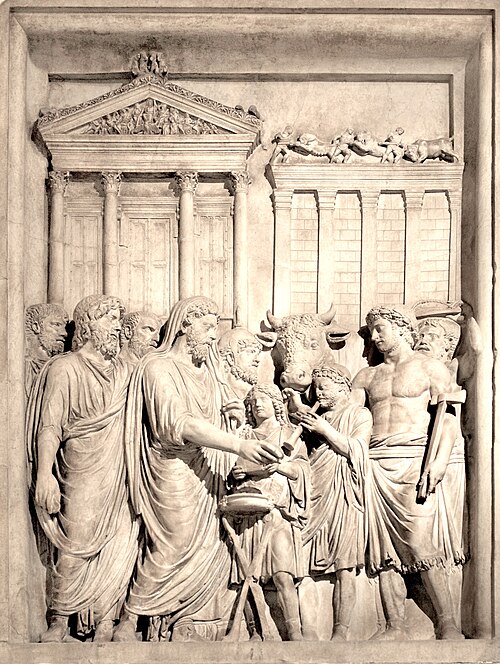
بدايةً، ترى العبادة الإمبراطورية في روما القديمة أن الأباطرة، وينضم إليهم بعض الأعضاء من أسرهم، يمثلون السلطة المفروض عليها عقوبات إلهية من دولة الروم. تشكل إطار العبادة الإمبراطورية في أوائل فترة برينسيبيت (Principate) في عهد الإمبراطور أغسطس (Augustus)، وسرعان ما ترسخت في جميع أرجاء الإمبراطورية والولايات التابعة لها، مع وجود اختلافات محلية في تلقيها والتعبير عنها. وتعرض الأقسام التالية جوانب أخرى من الموضوع.
وفي هذا السياق، كانت العبادة الإمبراطورية غير قابلة للفصل عن الآلهة الرسمية لروما، وكانت تلك العبادة مهمة لبقاء روما والتي أصبح إهمالها خيانة. كانت العبادة التقليدية أداة تركيز على تشريعات الصحوة الإمبراطورية في عهد ديكيوس (Decius) وديوكلتيانوس (Diocletian). رأى المدافعون عن المسيحية والمؤرخون للشهداء (martyrologists) عبادة الإمبراطورية على أنها أداة هجومية خاصة لمعصية واضطهاد «الوثنية». ومن ثم أصبحت أداة ارتكاز للجدل اللاهوتي والسياسي أثناء فترة الصعود المسيحية في عهد قسطنطين الأول (Constantine I) أخفق جوليان (Julian) في وقف تدني الدعم للممارسات الدينية الرسمية لروما: أما ثيودوسيوس الأول (Theodosius I)، فقد اعتنق المسيحية كديانة لدولة روما. وهُجرت الآلهة التقليدية لروما و«العبادة الإمبراطورية» بطريقة رسمية. على الرغم من ذلك، استمرت الكثير من الطقوس والممارسات التي كانت تميز عبادة الأباطرة في لاهوت الإمبراطورية المسيحية وسياساتها.
من جهة ثانية، تُعتبر العبادة الإمبراطورية في بعض الأحيان خروجًا عن القيم الجمهورية التقليدية لروما وعبادة شخصية غير مخلصة دينيًا التي ساعدت في الدعاية الإمبراطورية.
ومن ناحية أخرى، حولت إصلاحات أغسطس نظام الحكومة الجمهوري في روما إلى ملكية حقيقية تصاغ في الممارسات الرومانية التقليدية والقيم الجمهورية. كان من المتوقع أن يحقق براينسيبس (princeps) (المعروف لاحقًا بالإمبراطور) التوازن بين مصالح الجيش الروماني ومجلس الشيوخ والشعب والحفاظ على السلام والأمان والرخاء في جميع أنحاء الإمبراطوريات المتنوعة عرقيًا. أقر العرض الرسمي لـالعبادات للإمبراطور الحي بمنصبه وسيادته حسبما هو معترف به عند الإله والدستور: ينبغي على البرانسيبيت التابع له أن يبرهن على الاحترام النقي للآلهة الرومانية التقليدية وموريس.
- انظر كذلك
- عبادة شخصية
- عبقرية
- الدين في روما القديمة
- ملاحظات
ومن ناحية أخرى، يستحق الإمبراطور المتوفي الفخر ويتم التصويت للاهوت الدولة ( ديفيس (divus)، الجمع divi) من قبل مجلس الشيوخ ويرتقى إلى مكانة مشابهة لـالتمجيد. ساعد منح التمجيد الحكم الديني والسياسي والأخلاقي على الحكام الأباطرة وسمح للأباطرة الذين لا زالوا على قيد الحياة بربط أنفسهم مع سلالة ديفي الإمبراطورية التي تعد جيدة والتي استبعد منها الأسلاف غير المشهورين أو غير الجدرين. اتضح مدى فائدة تلك الأداة لـفيسبازيان (Vespasian) عند تأسيسه لـأسرة فلافيون الإمبراطورية (Flavian imperial dynasty) عقب وفاة نيرو (Nero) والحرب الأهلية ولـسيبتيميوس (Septimius) في توحيده لأسرة سيفيران (Severan) بعد اغتيال كومودوس (Commodus). في تطوير الحكم الإمبراطوري من برينسيبات إلى دوماينت، كان دور مجلس الشيوخ مهمشًا على نحو متزايد وأصبح ولاء الجيش مفتاح السلطة الإمبراطورية.
Harvard University Press, 2004. ISBN 0-674-01534-7
وفي هذا الصدد، Theuws, Frans, and Nelson, Janet L., Rituals of power: from late antiquity to the early Middle Ages, Brill Publishers, 2000. ISBN 90-04-10902-1
وفي السياق ذاته، Versnel, H S: Triumphus: An Inquiry into the Origin, Development and Meaning of the Roman Triumph, Leiden, 1970.
وفي السياق ذاته، Potter, David S., The Roman Empire at Bay, AD 180–395, Routledge, 2004. ISBN 978-0-415-10057-1
ومن ناحية أخرى، Severy, Beth, Augustus and the family at the birth of the Roman Empire, Routledge, 2003. ISBN 0-415-30959-X
وفي هذا السياق، Vout, Caroline, Power and eroticism in Imperial Rome, illustrated, Cambridge University Press, 2007. ISBN 0-521-86739-8
إضافةً إلى ذلك، Niehoff, Maren R., Philo on Jewish identity and culture, Mohr Siebeck, English trans GW/Coronet Books, 2001. ISBN 978-3-16-147611-2
في هذا الإطار، Momigliano, Arnaldo, On Pagans, Jews, and Christians, reprint, Wesleyan University Press, 1987. ISBN 0-8195-6218-1
ومن ناحية أخرى، Walbank, Frank W., Selected Papers: Studies in Greek and Roman History and Historiography, Cambridge University Press, 1986 (pp 120–137). ISBN 978-0-521-30752-9
وفي هذا السياق، Rosenstein, Nathan S., Imperatores Victi: Military Defeat and Aristocractic Competition in the Middle and Late Republic. Berkeley: University of California Press, 1990. Ark.CDlib.org
من جهة ثانية، Rehak, Paul, and Younger, John Grimes, Imperium and cosmos: Augustus and the northern Campus Martius, illustrated, University of Wisconsin Press, 2006. ISBN 0-299-22010-9
ومن جهة أخرى، Taylor, Lily Ross, The Divinity of the Roman Emperor, American Philological Association, 1931; repr. Arno Press, 1975.
إضافةً إلى ذلك، Nixon, C.E.V., and Rodgers, Barbara S., In Praise of Later Roman Emperors: The Panegyric Latini, University Presses of California, Columbia and Princeton, 1995. ISBN 978-0-520-08326-4
ومن جهة أخرى، Smallwood, E., Mary, The Jews under Roman rule: from Pompey to Diocletian: a study in political relations, illustrated, Brill Publishers, 2001. ISBN 0-391-04155-X
وفي هذا السياق، Williams, S., and Friell, J.G.P., Theodosius: The Empire at Bay, Taylor & Francis Ltd., 1994. ISBN 978-0-7134-6691-1
من جهة ثانية، Jörg Rüpke (Editor), A Companion to Roman Religion, Wiley-Blackwell, 2007, ISBN 978-1-4051-2943-5
وعلى صعيد آخر، Weinstock, Stefan. Divus Iulius. Oxford (Clarendon Press/OUP). 1971.
في هذا الإطار، Rees, R., Diocletian and the Tetrarchy, Edinburgh University Press, 2004. ISBN 978-0-7486-1661-9
من جهة ثانية، Price, S.R.F. Rituals and power: the Roman imperial cult in Asia Minor, (reprint, illustrated). Cambridge University Press, 1986. ISBN 0-521-31268-X
إضافةً إلى ذلك، Wiedemann, Thomas. Adults and Children in the Roman Empire, Taylor & Francis Ltd., 1989. ISBN 978-0-415-00336-0
مراجع وكتابات أخرى
من جهة ثانية، Martin, Dale B., Inventing superstition: from the Hippocratics to the Christians,
علاوةً على ذلك، Chow, John K., Patronage and power: a study of social networks in Corinth, Continuum International Publishing Group, 1992. ISBN 1-85075-370-9
وفي هذا الصدد، Fishwick, Duncan, The Imperial Cult in the Latin West: Studies in the Ruler Cult of the Western Provinces of the Roman Empire, volume 1, Brill Publishers, 1991. ISBN 90-04-07179-2
ومن ناحية أخرى، Elsner, J., "Cult and Sculpture; Sacrifice in the Ara Pacis Augustae", in the Journal of Roman Studies, 81, 1991, 50–60.
وفي هذا السياق، Lott, John. B., The Neighborhoods of Augustan Rome, Cambridge, Cambridge University Press, 2004. ISBN 0-521-82827-9
من جهة ثانية، Bowman, A., Cameron, A., Garnsey, P., (eds) The Cambridge Ancient History: Volume 12, The Crisis of Empire, AD 193–337, 2nd Edn., Cambridge University Press, 2005. ISBN 0-521-30199-8
وفي هذا الصدد، Fishwick, Duncan, The Imperial Cult in the Latin West: Studies in the Ruler Cult of the Western Provinces of the Roman Empire, volume 3, Brill Publishers, 2002. ISBN 90-04-12536-1
وفي السياق ذاته، Fishwick, Duncan, "Numen Augustum," Zeitschrift für Papyrologie und Epigraphik, Bd. 160 (2007), pp. 247–255, Dr. Rudolf Habelt GmbH, Bonn (Germany).
كذلك، Gradel, Ittai. [http://www.e-reading.org.ua/bookreader.php/134603/Emperor_Worship_and_Roman_Religion.pdf Emperor Worship and Roman Religion], Oxford, Oxford University Press, 2002. ISBN 0-19-815275-2 Haase, W., Temporini, H., (eds), Aufstieg und Niedergang der romischen Welt, de Gruyter, 1991. ISBN 3-11-010389-3
وعلى صعيد آخر، Bowersock, G., Brown, P. R .L., Graba, O., (eds), Late Antiquity: A Guide to the Postclassical World, Harvard University Press, 1999. ISBN 978-0-674-51173-6
وفي هذا السياق، Brent, A., The imperial cult and the development of church order: concepts and images of authority in paganism and early Christianity before the Age of Cyprian, illustrated, Brill Publishers, 1999. ISBN 90-04-11420-3
في هذا الإطار، Beard, M., Price, S., North, J., Religions of Rome: Volume 2, a sourcebook, illustrated, Cambridge University Press, 1998. ISBN 0-521-45646-0
وفي السياق ذاته، Howgego, C., Heuchert, V., Burnett, A., (eds), Coinage and Identity in the Roman Provinces, Oxford University Press, 2005. ISBN 978-0-19-926526-8
إضافةً إلى ذلك، Collins, Adela Yarbro, Crisis and catharsis: the power of the Apocalypse, Westminster John Knox Press, 1984. ISBN 0-664-24521-8
إضافةً إلى ذلك، Beard, M., Price, S., North, J., Religions of Rome: Volume 1, a History, illustrated, Cambridge University Press, 1998. ISBN 0-521-31682-0
ومن جهة أخرى، Harland, P., "Honours and Worship: Emperors, Imperial Cults and Associations at Ephesus (First to Third Centuries C.E.)", originally published in Studies in Religion/Sciences religieuses 25, 1996. Online in same pagination: Philipharland.com
إضافةً إلى ذلك، Harland, P., "Imperial Cults within Local Cultural Life: Associations in Roman Asia", originally published in Ancient History Bulletin / Zeitschrift für Alte Geschichte 17, 2003. Online in same pagination: Philipharland.com
كذلك، MacCormack, Sabine, Change and Continuity in Late Antiquity: the ceremony of "Adventus", Historia, 21, 4, 1972, pp 721–52.
وفي هذا الصدد، Ferguson, Everett, Backgrounds of early Christianity, 3rd edition, Wm. B. Eerdmans Publishing, 2003. ISBN 0-8028-2221-5
وفي هذا السياق، Lee, A.D., Pagans and Christians in late antiquity: a sourcebook, illustrated, Routledge, 2000. ISBN 0-415-13892-2
في هذا الإطار، Freisen, S. J., Imperial cults and the Apocalypse of John: reading Revelation in the ruins, Oxford University Press, 2001. ISBN 978-0-19-513153-6
وفي السياق ذاته، Cannadine, D., and Price, S., (eds) Rituals of Royalty: Power and Ceremonial in Traditional Societies, reprint, illustrated, Cambridge University Press, 1992. ISBN 0-521-42891-2
وفي هذا الصدد، Beard, Mary: The Roman Triumph, The Belknap Press of Harvard University Press, Cambridge, Mass., and London, England, 2007. ISBN 978-0-674-02613-1
📝 هل في هذه المقالة خطأ؟
إذا وجدت معلومة تحتاج تصحيحاً أو إضافة، أو أردت حذف المقالة، أرسل لنا طلباً وسنراجعه.
ما رأيك في هذه المقالة؟